From NOC to AOC: Why Trust Is the Real Infrastructure for Agentic Operations
Preparing for agentic infrastructure is a trust problem.
Every network operations leader has lived through the alarm swarms and ticket swarms of the traditional NOC. Agentic AI allows specialized agents to absorb that noise, find root cause, and act. The promise is real. But an agent’s decisions are only as trustworthy as the data it’s provided, the paths it can act through, the people who supervise it, and the economics that justify it.
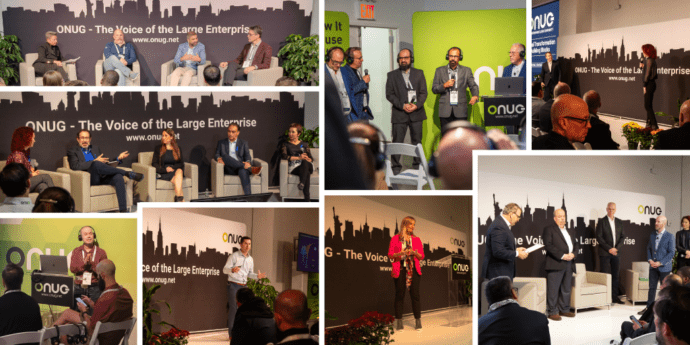
That was the throughline of From NOC to AOC – Agentic Operations You Can Trust at the AI Networking Summit in Frisco | Dallas. Jon Pruskowski (Capital One), Damien Garros (OpsMill), Josh Kindiger (Grok), and Susie Wee (DevAI) did not debate whether the agentic operations center (AOC) is coming. They debated what has to be true for anyone to trust it.
Stop asking whether the NOC goes dark
“Will we ever have a dark NOC?” is the wrong first question. The better question is which functions agents should own, and where we need to keep human expertise.
The work most likely to disappear is the real-time loop of monitoring, triaging, and fixing. What remains is expert judgment.
Garros proposed a sharper target: the one-person NOC, in the same way a single founder can now build a large business. Pruskowski called it the “flashlight NOC.” Instead of aiming to have an empty room, the goal should be to have a small number of experts running a fleet of agents.
Garros also argued that the most advanced network automation teams already operate this way and simply don’t talk about it. The real gap is how fast everyone else catches up.
Agents inherit your data
The distance between the dark-NOC ambition and today’s reality is mostly data: accurate inventory, accurate topology, and real-time context across the ten different systems operators currently swivel between.
The point is not to wait for perfect data because waiting is a way of never starting.
Garros added a distinction most teams miss. Observability data tells you what is running, and intent data tells you what should be running. An agent needs both in order to tell whether something is actually wrong.
In the network automation era, teams that jumped straight to scripts often failed, while teams that built the data platform first moved the fastest. We are now seeing the same pattern is repeating with agents.
Never let an agent touch the device
The instinct when introducing AI into operations is to stay read-only. Garros argued that instinct is a trap. Read-only work only builds observability data. Accurate intent data comes from actually pushing configuration through a system of record.
That same pipeline is the guardrail agentic infrastructure needs. Every change flowing through it gets reviews and safety checks, whether a human or an agent initiated it.
This is the most practical step an infrastructure team can take today. Building the change pipeline now solves two problems at once: the data agents need and the control their actions require.
The operator becomes the supervisor
The people in today’s NOC carry enormous institutional knowledge, much of it in their heads. An AOC does not make that knowledge obsolete. It changes where it is applied.
Pruskowski framed the shift with a model he calls DOSI.
This is another uncomfortable journey, much like the move to CI/CD pipelines and infrastructure as code. Two lessons from that era apply.
First, don’t expect every operator to build the tools. Garros pointed out that telling every network engineer to “learn Python” was the wrong narrative last time. Success came from new, dedicated roles such as network automation architects. Agent tooling needs the same. The good news: existing network automation teams are close to exactly what AI tooling requires.
Second, be honest. Kindiger urged leaders not to hide that efficiency is the goal, while giving people a real path to grow. Wee added that insiders who embrace the change are the best candidates for the new roles because they already know how the business works. With AI, they gain what she called superpowers: seeing around corners and pulling insight from across every tool.
Trust has a budget
The traditional NOC measured itself on mean time to repair, ticket closure times, and touch points. While these metrics are important, they don’t tell you whether you can trust your agents.
Are we in a world where whoever uses the most tokens wins? The answer must be no, because if an organization spends $10 million on tools and tokens to save $1 million, it lost. The value delivered must exceed amount spent.
The second budget is error tolerance. Wee’s team at DevAI made an explicit call on where hallucination is acceptable and where it is not.
Every team preparing for agentic infrastructure should make the same call, in writing, before agents go into production.
FAQs
What is the first step toward agentic network operations?
Get the data right: accurate inventory, topology, and both observability and intent data. It does not need to be perfect to start.
How should AI agents make network changes safely?
Through a governed change pipeline with reviews and safety checks, rather than connecting directly to devices.
How do you measure success in an agentic operations center?
By whether value delivered exceeds the cost of tools and tokens, and by a defined tolerance for AI errors, instead of by tokens consumed.
The conversation continues
The AOC is coming. The organizations that get there first won’t be the ones with the most agents. They will be the ones whose agents are trusted, because the data, the change paths, the people, and the economics were ready for them.
The conversation continues at the AI Networking Summit NYC. Get your ticket.