Building the Next - Gen Network for Enterprise AI Adoption
New York City's PENN District - 100 W 33rd Street @ 6th Avenue- October 28-29, 2026


















Don’t miss the next AI Networking Summit, where enterprise IT leaders learn how to evolve their networks into AI-Native Infrastructure. Join us to go beyond theory and discover real-world frameworks from the experts leading the AI-native transition.
The AI Networking Summit provides enterprises with the knowledge and strategies that are critical to a successful transition from AI experimentation to true AI readiness. Join us in New York as we equip IT leaders, architects and practitioners with the frameworks, architectures and operational models needed to build and scale AI inside the enterprise.
Taking place October 28-29 in Midtown Manhattan’s PENN DISTRICT, the Summit is conveniently located close to Penn Station and all major subway and bus lines.
Join the biggest names in Industry and Enterprise IT as we move towards successful AI implementation and adoption.
Register Today

For infrastructure leaders dealing with the reality of present day constraints: GPU scarcity, power and cooling limits, heterogeneous silicon management, fabric choice, and the talent gap to run it all.
Behind every AI workload is a network that has to move data faster, more reliably, and more efficiently than ever before. Broadcom will discuss the infrastructure layer, from networking silicon to enterprise networking systems that underpins AI readiness, and what it means for enterprises building networks designed to scale with AI demand rather than react to it.
This session transforms ‘AI-native enterprise fabric’ from whiteboard concept to buildable blueprint. Panelists walk through real BOMs, topology choices, and integration patterns for converging high-performance fabrics, GPU/DPU servers, distributed storage, and closed-loop automation into a reference architecture deployable in 2026 – not 2030. The session addresses the five constraints every infrastructure team actually faces: GPU scarcity, power and cooling limits, heterogeneous silicon management, network fabric choices, and the talent gap.
Frontier AI models have broken the industry’s release cadence. What used to arrive quarterly now lands monthly — sometimes weekly — as AI systems surface vulnerabilities and generate fixes faster than any enterprise change process was ever designed to absorb. Most organizations are responding by working harder inside a model built for a slower world: longer maintenance windows, bigger patch backlogs, more risk accepted by exception. That path ends in a train wreck.
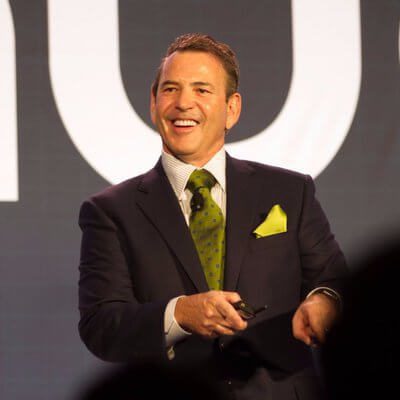
There is another path, and it is not new — it is simply new to infrastructure. The software world solved this years ago with CI/CD pipelines, continuous testing, and a disciplined SDLC; the cloud providers solved it at scale. In this keynote, Tom Gillis lays out what that operating model looks like when applied to infrastructure: treating infrastructure as code, bringing test-driven discipline and automated validation to the network, and moving from human-gated change windows toward continuous, verified deployment. He takes on the hard questions it raises — what gets automated and what still needs a human, how you build confidence in changes no one personally reviewed, what tooling enterprises actually need from their vendors to make this real, and how the enterprise-provider relationship has to change when both sides are operating at machine speed.
Why this session matters: The gap between how fast software now changes and how fast enterprises can safely deploy it is the defining operational problem of the AI era. The organizations that redesign their operating model will pull away from those still trying to patch their way out. This is the blueprint for that redesign.
Enterprises spent two decades building a data stack for humans and reports. Agentic AI is now reading, querying, writing, and recombining that data at machine speed – and the new data layer that feeds it looks nothing like the one that came before. Vector databases, RAG pipelines, embedding stores, and persistent agent memory have become the live substrate of the business. This panel convenes data, security, and network leaders rebuilding the data layer for agentic load: what the stack actually looks like in production, how agentic RAG is reshaping retrieval patterns, the network impact most teams did not see coming (east-west traffic explosion, cross-region sovereignty crossings, new egress cost curves), and the governance gap traditional DLP and DSPM tools are not closing (vector stores outside classification, prompt-assembled contexts that leak across trust boundaries, shadow RAG pipelines built outside sanctioned platforms).
Enterprises that have already rebuilt their fabrics for AI are sharing what works and what broke first. The track explores how the network, not the GPU, is now the binding constraint on what an enterprise can build.
Traditional enterprise IP networks – designed for small, random, short-lived flows – are structurally incompatible with AI’s traffic patterns: synchronized, long-lived, bandwidth-hungry, and catastrophically sensitive to tail latency. This panel brings together the network architects who have actually redesigned their fabrics for AI, sharing what they changed, what they got wrong first, and what every enterprise network team must address before AI workloads hit production.
Agentic AI doesn’t just run on networks – it increasingly manages them. This session explores the emerging reference architecture for treating AI agents as first-class identities in enterprise networking: how to standardize identity and trust among agents, how agents interact with the underlying network fabric, and how to avoid agent sprawl where competing AI assistants issue conflicting network changes. The panel introduces ONUG’s Agent-to-Agent (A2A) framework and explores what Zero-Trust identity for autonomous agents looks like in practice.
In May, this community left Dallas with a dare: let go of decades of rigid, human-scale architecture and embrace controlled autonomy — AI agents in the fabric, governed by humans at the boundaries. Six months later, the dare has become a deadline. Petabyte networks are no longer the leading edge — they are the baseline. Agentic AI has moved from awards-stage demos to production credentials with the power to provision, reroute, and break things at machine speed. Post-quantum migration clocks started ticking inside the execution window. And the enterprises that took the spring challenge seriously are now discovering the harder truth: AI is no longer an application running on your infrastructure — it is becoming the infrastructure, and every WAN, fabric, identity framework, and operations center you own was built for the world before it. This keynote picks up exactly where Dallas left off and lays out the build agenda for the AI decade: the five architectural decisions that cannot wait past 2027, the security preconditions no AI program survives without, and why the network — not the GPU — is now the binding constraint on what your enterprise can become. Over two days, 2,000 of your peers — the architects of the Fortune 100’s AI build-out — will show what they have shipped, what broke, and what they are betting on next. This is where the community stops debating autonomy and starts building it.
Why This Session Matters
Spring proved the community is ready to let go. Fall is where the people accountable for the answer — CIOs, CTOs, CISOs, and the network architects of the world’s largest enterprises — compare blueprints before locking in 2027 budgets. Miss this room and you rebuild alone.
As enterprises move from AI pilots to production-scale deployments, the network must evolve to support unprecedented compute and data demands across clouds. In this keynote, Google will share its perspective on architecting networking infrastructure capable of powering AI and agentic workloads at scale ensuring experiences that are fast, reliable, secure and open. From data center fabrics, to hybrid and cross-cloud connectivity, agentic networking, and what enterprise network architects should be planning for now.
We spent the last decade making infrastructure programmable. The next challenge is making it understandable enough to operate itself.
More than forty years after the famous quote “the network is the computer,” AI is making that idea impossible to ignore. Before AI agents can safely act across networks, clouds, applications and security domains, they need more than intelligence—they need an accurate, real-time model of how the environment is connected, behaving and changing.
This keynote explores why network-centric observability – and the knowledge graph it creates – must become the foundation for trusted, explainable autonomous IT. Because the limiting factor for autonomous operations may not be the intelligence of the agent, but the quality of its understanding of the environment.
This track explores the Agentic Operations Center and how it will manage the recent wave of AI-surfaced vulnerabilities.
We spent the last decade making infrastructure programmable. The next challenge is making it understandable enough to operate itself.
More than forty years after the famous quote “the network is the computer,” AI is making that idea impossible to ignore. Before AI agents can safely act across networks, clouds, applications and security domains, they need more than intelligence—they need an accurate, real-time model of how the environment is connected, behaving and changing.
This keynote explores why network-centric observability – and the knowledge graph it creates – must become the foundation for trusted, explainable autonomous IT. Because the limiting factor for autonomous operations may not be the intelligence of the agent, but the quality of its understanding of the environment.
Frontier AI models have broken the industry’s release cadence. What used to arrive quarterly now lands monthly — sometimes weekly — as AI systems surface vulnerabilities and generate fixes faster than any enterprise change process was ever designed to absorb. Most organizations are responding by working harder inside a model built for a slower world: longer maintenance windows, bigger patch backlogs, more risk accepted by exception. That path ends in a train wreck.
There is another path, and it is not new — it is simply new to infrastructure. The software world solved this years ago with CI/CD pipelines, continuous testing, and a disciplined SDLC; the cloud providers solved it at scale. In this keynote, Tom Gillis lays out what that operating model looks like when applied to infrastructure: treating infrastructure as code, bringing test-driven discipline and automated validation to the network, and moving from human-gated change windows toward continuous, verified deployment. He takes on the hard questions it raises — what gets automated and what still needs a human, how you build confidence in changes no one personally reviewed, what tooling enterprises actually need from their vendors to make this real, and how the enterprise-provider relationship has to change when both sides are operating at machine speed.
Why this session matters: The gap between how fast software now changes and how fast enterprises can safely deploy it is the defining operational problem of the AI era. The organizations that redesign their operating model will pull away from those still trying to patch their way out. This is the blueprint for that redesign.
Before this summer, infrastructure operations ran on a philosophy decades in the making: qualify a design, test it rigorously, deploy it — and then change it as little as possible. Availability versus change was a balance every operator knew how to strike. The Summer of Mythos destroyed that balance. When AI systems began surfacing critical, exploitable vulnerabilities across the entire installed base — wave after wave, with more waves coming — the “don’t breathe on it” operating model didn’t bend. It broke.
In this executive fireside, senior infrastructure leaders from large, regulated enterprises join James Walker for a candid discussion of what it was actually like to operate through the storm — and how it has permanently changed the way their organizations run. The patch storm forced what years of digital transformation programs could not: a wholesale shift toward CI/CD-style operations for infrastructure, where switches, routers, firewalls, and load balancers are updated continuously rather than annually, and where the question on the table is no longer whether to automate the lifecycle but how fast autonomy can safely arrive.
Each leader will compare their operation before and after the summer — what changed in incident management, change windows, regression testing, and risk acceptance when emergency updates became the steady state. The conversation will dig into the organizational consequences: L1 and L2 work giving way to engineers who design the guardrails agents operate within and teach the system what good looks like; NOC and SOC boundaries dissolving as networking and security telemetry converge; and intelligence pushing out of the centralized data lake and down into the infrastructure itself, where distributed agents detect, diagnose, and increasingly remediate without assembling a war room.
The destination is autonomous lifecycle management — infrastructure that monitors itself, patches itself, and validates its own changes through digital twins and continuous, non-disruptive upgrade loops. The panel will be direct about how far along that path their enterprises really are, where regulated industries draw the line on removing the human gate, and what governance has to look like when the change cadence is set by machines rather than by maintenance calendars.
This no-slides, CTO-driven discussion gives attendees an unfiltered view of the hardest operational transition of their careers — and a working map of what leading infrastructure at scale looks like on the other side of it.
The NOC is being replaced – not by a product, but by an operating model. Agentic Operations Centers (AOCs) combine AI-driven monitoring, autonomous remediation, and human oversight in a new operational structure that can handle the speed, complexity, and volume of AI-era infrastructure incidents. This session addresses the hard operational questions: which Tier-1 and Tier-2 operations are genuinely ready for agent delegation today, how do you train agent supervisors who can oversee closed-loop systems without being buried in noise, and what does human-in-the-loop governance look like when AI incidents unfold in seconds?
WHY THIS SESSION MATTERS
NY-area enterprises are spending enormous sums on AIOps tools that are underdelivering because they’re being bolted onto NOC operating models that haven’t changed. This session shows what the operating model has to look like for AI-driven operations to actually work.
PQC has stopped being a future mandate and become a present-day procurement requirement, driven by CNSA 2.0 and looming federal deadlines. Across sessions, you will hear that the actual bottleneck isn’t the cryptography, it’s crypto-asset discovery (knowing where your keys and certificates actually live), building real crypto agility, and closing exposure across third-party and vendor supply chains.
Every enterprise now has PQC on the board agenda. What separates the organizations that will meet CNSA 2.0 and emerging regulatory horizons from those that won’t is no longer the mandate – it’s the program. This panel convenes cryptography and PKI leaders running active PQC migrations inside large financial services and healthcare institutions. The focus is operational: how they structured the program and who owns it; what is shipping today (crypto-asset discovery at scale, hybrid TLS at the customer edge, SLH-DSA and LMS/XMSS for code and firmware signing, PKI lifecycle automation, and crypto-agile abstraction in new builds); and what is realistically still gated (FIPS 140-3 validated PQC HSMs at enterprise scale, the deep protocol ecosystem – IPsec, IKEv2, SSH, SWIFT, FIX, ISO 20022 – mainframe and payment-terminal coverage, the second wave of signature standards, and partner and vendor chain interop). Panelists share budget envelopes, the organizational patterns that are working, unresolved dependencies, and lessons learned the hard way. Every attendee leaves with a concrete list of actions to put in motion within 30, 90, and 365 days.
WHY THIS SESSION MATTERS
The regulatory and CNSA 2.0 clock is inside the execution window. Boards have stopped asking ‘do we have a plan?’ and started asking ‘what have we shipped?’ This session is the peer-validated roadmap from enterprises that have an answer.
Executive Order 14413 and the broader federal post-quantum cryptography mandate signal that PQC is moving from a technical recommendation to a requirement for continued participation in government and increasingly regulated markets. This is not another security-program rollout: it is the forced replacement of a hidden mathematical dependency embedded across operating systems, networks, clouds, applications, identities, devices, certificates, code-signing systems, hardware, software libraries, supply chains, and long-lived data while all those systems remain interconnected and operational. The impact will extend beyond prime contractors through cloud providers, integrators, technology vendors, critical-infrastructure operators, and downstream suppliers, reshaping product roadmaps, procurement requirements, validation processes, and enterprise architectures. This panel will examine how industry can execute the largest coordinated technology transition no single entity controls, make invisible cryptography observable and governable, manage years of coexistence between legacy, hybrid, and post-quantum systems, and avoid turning the transition itself into a source of operational disruption and systemic risk.
The post-quantum cryptography (PQC) transition is no longer theoretical — it’s a procurement requirement. With the U.S. federal government moving toward mandatory PQC compliance for contractors (expected by 2029–2031) and allies like France already refusing to certify non-PQC-compliant software, large enterprises across financial services, healthcare, insurance, and beyond are being forced to act, whether or not they sell directly to government.
This session brings together practitioners who have actually started — or are deep into — their quantum-safe journey to share what the work really looks like once you move past the slide deck. Moving beyond vendor pitches and theoretical timelines, this panel focuses on the operational reality: where organizations get stuck, how they get unstuck, and what “crypto agility” actually requires on the ground.
Topics will include:
Who Should Attend
CISOs, infrastructure and network leaders, risk and compliance teams, and anyone responsible for preparing their organization’s transition plan toward post-quantum cryptography — especially those whose business depends on continued federal government connectivity.
Recent reporting suggests that Frontier AI systems are moving from assistive tools to autonomous operators capable of conducting end-to-end offensive cyber operations in hours rather than weeks. By reasoning, planning, and adapting without direct instruction, these systems can discover zero-day vulnerabilities, chain exploits, and compress defenders’ decision cycles beyond the pace of human-led security operations. This shift has immediate implications for national security, cryptographic resilience, and organizational governance, turning post-quantum migration and AI-speed incident response from long-term priorities into urgent continuity requirements. Attendees will leave with a clear-eyed framework for preparing their organizations for the pending convergence of autonomous offense, quantum-vulnerable cryptography, and machine-speed incident response — knowing what to put in motion now, what to harden first, and how to build defenses that operate at the same tempo as the threat.
These sessions highlight the importance of building security into the fabric itself; not bolted onto the network after the fact.
AI is reshaping both the opportunities and the attack surface for enterprise networks. Fortinet will explore how security must be built into the network fabric itself, not bolted on after the fact as enterprises adopt AI-driven applications and infrastructure. Expect a practitioner-focused look at converging networking and security to keep pace with AI-scale threats and traffic.
Static security controls break in dynamic environments – and AI-driven infrastructure is the most dynamic environment enterprises have ever operated. This session applies SRE discipline to cybersecurity: treating security controls as SLO-backed services, building continuous validation pipelines that detect control drift before attackers find it, and designing break-glass procedures for when AI-driven automation goes out of bounds.
In this session, George Moser draws on his experience as a former Fortune 500 CISO and his current work advising the world’s largest enterprises to show why zero trust has become the architectural foundation that separates AI-ready organizations from those still experimenting. For the architects, security leaders, and infrastructure teams building AI into production, he’ll share how zero trust principles apply to protecting AI workloads and data pipelines, and why the same architectural choices that enable AI also neutralize AI-powered threats
FedEx operates one of the world’s most complex, real-time logistics and digital networks—moving millions of packages daily while transmitting petabytes of data across its systems. To operate at this scale, FedEx has embedded AI across its business, from its Surround® platform, which uses machine learning to monitor shipments in real time, to predictive analytics that anticipate delays, optimize routes, and proactively manage disruptions.
In this keynote, Gene Sun and Arvind Rajagopalan will share how FedEx is using AI to transform both physical and digital operations. Attendees will hear how AI models improve network planning, enable dynamic rerouting, enhance last-mile efficiency, and deliver predictive customer insights—turning logistics from reactive to intelligent and anticipatory. The session will highlight real outcomes, including improved delivery performance, reduced operational cost, and increased resiliency across a globally distributed network.
Equally critical, FedEx will detail how they are deploying AI responsibly at enterprise scale. As AI becomes embedded in mission-critical workflows, FedEx has implemented strict guardrails around data governance, model validation, cybersecurity, and operational controls. Gene and Arvind will discuss how they secure AI systems end-to-end—protecting sensitive data, preventing misuse, and ensuring trust—while still enabling rapid innovation.
This session offers a rare inside look at how a global leader is operationalizing AI—combining massive business value with the security, control, and governance required to run one of the world’s most important logistics networks.





*Early bird pricing through September 16th, 2026
AI Networking Summits are critical events for enterprise IT executives and practioners. With over 1,000 attendees, 45+ sponsors and a speaker line up filled with the Industry’s brightest minds, the Summit is the place to learn about the monumental impact AI will have on the future of the digital enterprise. Don’t miss the 2026 event in New York City, October 28-29.