The New Compact: What Suppliers Owe Consumers When Customers Can Build Anything
For decades, the relationship between technology suppliers and enterprise consumers ran on a simple exchange: customers described what they needed, suppliers built it into the roadmap, and everyone waited. Frontier-class AI ended that arrangement. Enterprise teams can now write virtually any feature, integration, or workflow they need — in days, not quarters. The feature request is dying, and so is the idea that a good product is a fixed feature set chosen by the vendor. What customers cannot write for themselves is the thing underneath: a product genuinely built for that kind of extensibility — the platform, the telemetry, the supported surfaces, and the trust that what they build will run safely on infrastructure the supplier stands behind.
This session puts both sides of the new compact on the same stage. Tom Gillis and a senior executive from a frontier model provider represent the platform providers — the network and security infrastructure the enterprise runs on, and the AI systems the enterprise builds with and extends. Tsvi Gal represents the consumers — enterprises that are no longer waiting for roadmaps, and whose internal teams now use AI to extend, automate, and reshape their environments directly.
Together they work through what each side now owes the other:
- From roadmaps to AI-extensible products. If customers build the features, what is the supplier’s product? Open APIs, rich telemetry, stable and supported extension points, products designed to be tuned by the customer’s own AI — and what happens to vendors whose value was the feature list.
- The support and accountability question. When a customer-written agent misconfigures a production network, who owns the outcome? What does “supported” mean when the supplier didn’t write the code running on its platform?
- Co-engineering as the new normal. The patch storm forced suppliers and consumers to operate as one team — prioritized remediation lists, shared tooling, joint cadences. Which parts of that wartime relationship should become permanent?
- What consumers must bring. Platform access is not a one-way demand. Enterprises must invest in verification, guardrails, and the engineering discipline to be a safe co-developer on someone else’s platform.
- The economics. What does pricing, licensing, and the vendor relationship look like when value shifts from features delivered to AI-extensible capability exposed?
The promise of the session: a frank negotiation, in public, of the new terms between the companies that provide the platforms and the enterprises that now build on them — with both sides saying out loud what they need the other to do differently, starting now.

Charlene O’Hanlon is an award-winning journalist and content professional serving the technology sector for more than 20 years as director, executive editor and managing editor for numerous technology-focused sites. As VP and Managing Editor at Activate Marketing Services, she leads a team of writers and editors who create client-focused content for marketing programs in the B2B tech sector. In her former position as Chief Operating Officer at Techstrong Group, Charlene led the direction and management of Techstrong Learning and Techstrong Live! webinars and events divisions. Charlene also served as co-host and anchor of the Techstrong TV streaming broadcast.
Charlene is co-author of “The Lifecycle of Fashion Technology” and is a frequent speaker at industry events and conferences. In her spare time, she is an avid drummer and is working toward achieving a Level 4 Diploma in Wines from the Wine & Spirit Education Trust (WSET).


Tom Gillis is the Chief Technology Officer at Cisco, where he drives the company’s vision for systems-level platform innovation. In this role, he focuses on helping customers navigate complex architectural shifts by leveraging Cisco’s comprehensive platform, spanning from the silicon layer through to the software and systems layer. A respected industry leader with deep expertise in secure integrated networking and enterprise computing, Tom is dedicated to empowering organizations to reduce risk, streamline management, and effectively adapt to the evolving technological landscape.
Previously, Tom served as Senior Vice President and General Manager of the Infrastructure & Security Group at Cisco, where he oversaw the global security business and led initiatives to build secure infrastructure within a unified framework. Prior to that, he led Cisco’s Security Business Group, focusing on simplifying the security experience globally.
Before joining Cisco, Tom was the Senior Vice President and General Manager of the Network and Advanced Security Business Group at VMware, where he oversaw the endpoint, networking, load balancing, and network security businesses. He was also the CEO and co-founder of Bracket Computing, which was acquired by VMware.
Earlier in his career, Tom was the General Manager of the Security Technology Group at Cisco, managing security management, appliances, applications, and endpoint services. As part of the founding team at IronPort Systems, he served as Senior Vice President of Marketing, leading the company to become a premier provider of antispam, antivirus, and antimalware appliances. Under his leadership, IronPort achieved an average growth of 100 percent year-on-year for seven years before being acquired by Cisco.
Tom’s career also includes roles at iBEAM Broadcasting, Silicon Graphics, Boston Consulting Group, and Raytheon. He is a noted advisor to startups and venture capital firms, serving on several boards of directors. Tom holds an M.B.A. from Harvard University, an M.S.E.E. from Northwestern University, and a B.S.E.E. from Tufts University.

Tsvi has over 25 years of technology and operations experience mostly in financial services, media and telecom and is known across the industry for his technology leadership, innovation and business acumen.
At MSKCC, Tsvi leads technology services as well as the High performance Computing technology enabling AI, genomic sequencing as well as major transformation using EPIC, divisional Agile & DevOps transformation and the changes to the ways of work in technology, workforce strategy, and front-to-back initiative.
Prior to MSKCC, Tsvi served as CTO of Morgan Stanley’s shared services (infrastructure & data), Tsvi had been responsible for transforming the bank into a modern, efficient and effective organization. He completed a hundreds of million net cost reduction initiative while productivity and satisfaction improved.
Working collaboratively with the leaders of business technology, Tsvi led the creation and implementation of Morgan Stanley’s multi-year strategy and target state architecture along with the standards, guidelines, blueprints and use patterns that made it actionable to the engineering and development communities, broke the silo mentality and aggressively reduced technology debt.
Tsvi’s work helped position the bank as a leader in algorithmic trading/ ultra-low latency, migration to public cloud and containers, AI & machine learning, cyber security, mainframe optimization, data center consolidation, modern client experience, global network and near-fault tolerant operations.
Tsvi also oversaw the governance and regulatory compliance work with internal and external auditors and examiners.
Tsvi is the winner of the Einstein Award for technology excellence and known as a provider of strategic thought leadership and excellence in execution and transformation.
His experience ranges from traditional (server, storage, networks, operations, mainframes) to modern (public and private cloud, containers, cyber security) infrastructure as well as application development and Agile/DevOps transformation, with the focus on creating business value.
Greatest achievements are rooted from understanding and enabling the business to deliver both existing and new offerings in a combination of efficiency (cost), delivery focus (execution) and future-proofing (innovation).
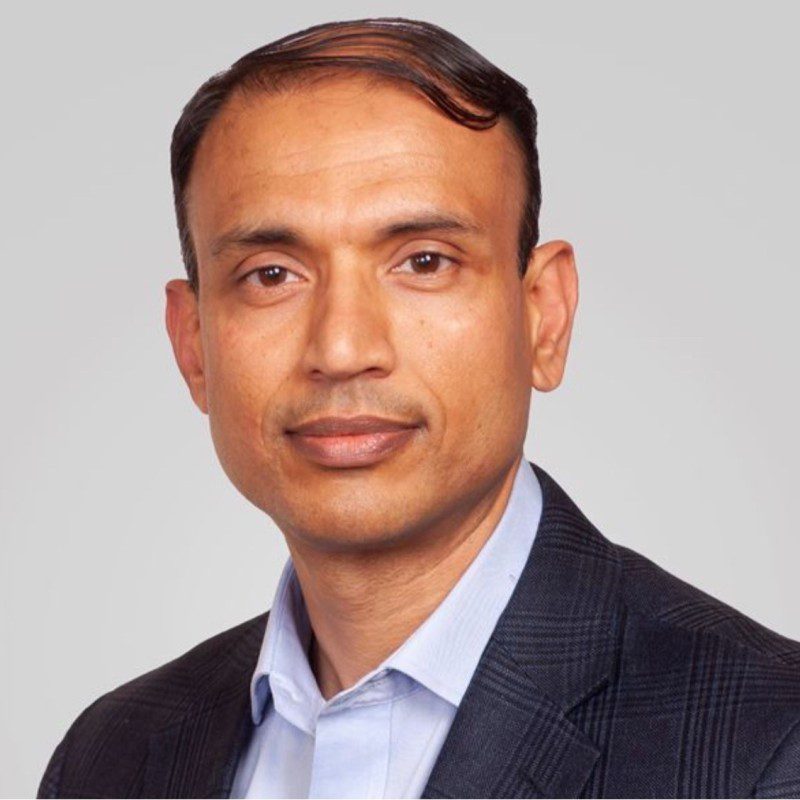
Satish Natarajan is an Executive Director at RTX, leading and responsible for Enterprise Digital Resiliency. He is a senior leader with deep expertise in safeguarding enterprise systems, driving operational continuity, and enabling secure digital transformation. Satish oversees global strategies that strengthen organizational resilience, modernize critical infrastructure, and protect mission‑essential services against emerging technology and operational risks.
With a career spanning complex program leadership, cross‑functional transformation, and enterprise‑level risk governance, Satish is also passionate with building high‑performing teams, advancing enterprise digital capabilities, and partnering with senior executives to align technology stability with organizational strategy. He has a strong track record of leading large‑scale M&A and digital transformation across Hosting, resiliency initiatives, enhancing recovery readiness, and ensuring organizations can serve stakeholders reliably during disruption.
Satish brings a collaborative, mission‑driven leadership approach, and a commitment to strengthening communities through technology, making him a valuable contributor to nonprofit groups focused on impact, continuity, and long‑term sustainability. He holds a master’s in business administration, and MS in Computer Applications.