
From Operator to Orchestrator: The Summer of Patch Hell and the Sprint to Autonomous Lifecycle Management
Before this summer, infrastructure operations ran on a philosophy decades in the making: qualify a design, test it rigorously, deploy it — and then change it as little as possible. Availability versus change was a balance every operator knew how to strike. The Summer of Mythos destroyed that balance. When AI systems began surfacing critical, exploitable vulnerabilities across the entire installed base — wave after wave, with more waves coming — the “don’t breathe on it” operating model didn’t bend. It broke.
In this executive fireside, senior infrastructure leaders from large, regulated enterprises join James Walker for a candid discussion of what it was actually like to operate through the storm — and how it has permanently changed the way their organizations run. The patch storm forced what years of digital transformation programs could not: a wholesale shift toward CI/CD-style operations for infrastructure, where switches, routers, firewalls, and load balancers are updated continuously rather than annually, and where the question on the table is no longer whether to automate the lifecycle but how fast autonomy can safely arrive.
Each leader will compare their operation before and after the summer — what changed in incident management, change windows, regression testing, and risk acceptance when emergency updates became the steady state. The conversation will dig into the organizational consequences: L1 and L2 work giving way to engineers who design the guardrails agents operate within and teach the system what good looks like; NOC and SOC boundaries dissolving as networking and security telemetry converge; and intelligence pushing out of the centralized data lake and down into the infrastructure itself, where distributed agents detect, diagnose, and increasingly remediate without assembling a war room.
The destination is autonomous lifecycle management — infrastructure that monitors itself, patches itself, and validates its own changes through digital twins and continuous, non-disruptive upgrade loops. The panel will be direct about how far along that path their enterprises really are, where regulated industries draw the line on removing the human gate, and what governance has to look like when the change cadence is set by machines rather than by maintenance calendars.
This no-slides, CTO-driven discussion gives attendees an unfiltered view of the hardest operational transition of their careers — and a working map of what leading infrastructure at scale looks like on the other side of it.


James Walker is a technology executive, inventor and entrepreneur with more than 30 years’ experience building and transforming technology platforms for some of the world’s largest enterprises.
Most recently, he served as Chief Administrative Officer of DXC Technology, with responsibility spanning global operations, corporate services and IT. Previously, he held senior technology and transformation roles at IBM, JPMorgan, Credit Suisse, Bank of America, and Walt Disney Studios.
His work has ranged from large-scale networks, cloud infrastructure and enterprise transformation to cloud economics and the practical adoption of artificial intelligence. He is now focused on applying AI and agentic software engineering to enterprise technology, developing new software products and pursuing a portfolio of inventions and patents.

Tsvi has over 25 years of technology and operations experience mostly in financial services, media and telecom and is known across the industry for his technology leadership, innovation and business acumen.
At MSKCC, Tsvi leads technology services as well as the High performance Computing technology enabling AI, genomic sequencing as well as major transformation using EPIC, divisional Agile & DevOps transformation and the changes to the ways of work in technology, workforce strategy, and front-to-back initiative.
Prior to MSKCC, Tsvi served as CTO of Morgan Stanley’s shared services (infrastructure & data), Tsvi had been responsible for transforming the bank into a modern, efficient and effective organization. He completed a hundreds of million net cost reduction initiative while productivity and satisfaction improved.
Working collaboratively with the leaders of business technology, Tsvi led the creation and implementation of Morgan Stanley’s multi-year strategy and target state architecture along with the standards, guidelines, blueprints and use patterns that made it actionable to the engineering and development communities, broke the silo mentality and aggressively reduced technology debt.
Tsvi’s work helped position the bank as a leader in algorithmic trading/ ultra-low latency, migration to public cloud and containers, AI & machine learning, cyber security, mainframe optimization, data center consolidation, modern client experience, global network and near-fault tolerant operations.
Tsvi also oversaw the governance and regulatory compliance work with internal and external auditors and examiners.
Tsvi is the winner of the Einstein Award for technology excellence and known as a provider of strategic thought leadership and excellence in execution and transformation.
His experience ranges from traditional (server, storage, networks, operations, mainframes) to modern (public and private cloud, containers, cyber security) infrastructure as well as application development and Agile/DevOps transformation, with the focus on creating business value.
Greatest achievements are rooted from understanding and enabling the business to deliver both existing and new offerings in a combination of efficiency (cost), delivery focus (execution) and future-proofing (innovation).

Christopher Moretti has been an executive leader with Evernorth Health Services (formerly Cigna) since October, 2015 and is currently responsible for all infrastructure engineering Leading the Global Engineering & Infrastructure Services. In this role, Chris provides executive leadership over the teams that deliver Cigna’s voice & data networks, security engineering, contact center, database, compute, storage, information management, mainframe, cloud & devops.
Previous to Cigna, Chris spent 14 years at General Electric and its subsidiaries in various executive leadership roles supporting its insurance, consumer and commercial banking businesses. While at GE, Chris attended and graduated many of their prestigious management training classes including AIMC and EIMP. Most recently, Christopher was Managing Director of Global Networks for J.P. Morgan Chase & Company based in midtown Manhattan.
Chris started his career in IT performing many different hands on technical roles in client/server, network and security for various sized firms in the greater New York market including a period where he consulted for Greenwich Technology Partners.
Chris earned a bachelor’s degree in economics from the University of Connecticut and currently resides in Shelton, CT with his wife and 3 sons.
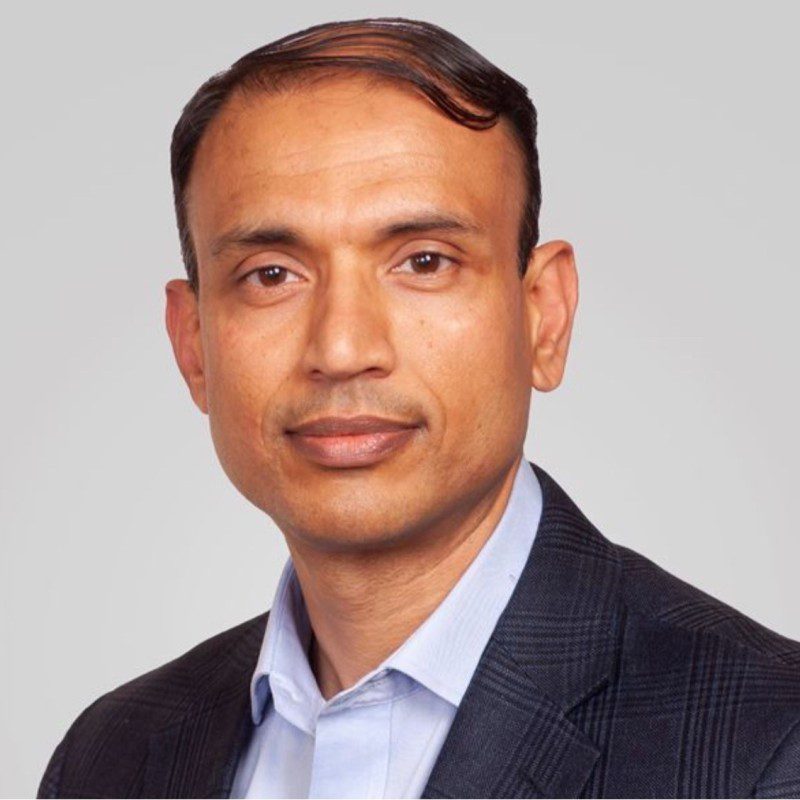
Satish Natarajan is an Executive Director at RTX, leading and responsible for Enterprise Digital Resiliency. He is a senior leader with deep expertise in safeguarding enterprise systems, driving operational continuity, and enabling secure digital transformation. Satish oversees global strategies that strengthen organizational resilience, modernize critical infrastructure, and protect mission‑essential services against emerging technology and operational risks.
With a career spanning complex program leadership, cross‑functional transformation, and enterprise‑level risk governance, Satish is also passionate with building high‑performing teams, advancing enterprise digital capabilities, and partnering with senior executives to align technology stability with organizational strategy. He has a strong track record of leading large‑scale M&A and digital transformation across Hosting, resiliency initiatives, enhancing recovery readiness, and ensuring organizations can serve stakeholders reliably during disruption.
Satish brings a collaborative, mission‑driven leadership approach, and a commitment to strengthening communities through technology, making him a valuable contributor to nonprofit groups focused on impact, continuity, and long‑term sustainability. He holds a master’s in business administration, and MS in Computer Applications.