About this episode
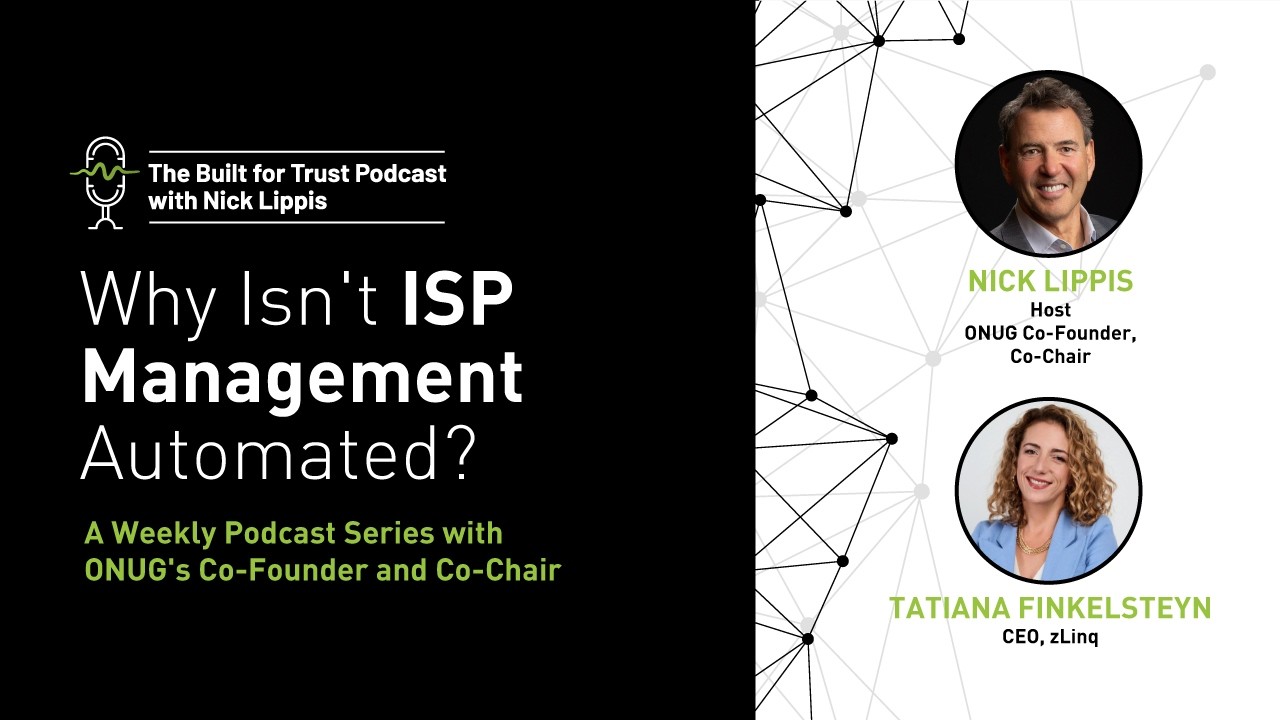
A construction crew cut one backup circuit and flights stalled across five airports for eight hours. Why is the management of the circuits underneath smart enterprise networks still run on spreadsheets, with roughly a third of telecom outages caused by unpaid bills?
What we cover in this episode
- The outage that made the case. A flight control system went down for eight hours across five airports because a construction crew cut a secondary circuit while the primary was already offline, producing roughly 4,000 delays and 500 cancellations. Telecom sits where outages are infrequent but enormous when they land, which is exactly why it gets so little attention until it breaks.
- How SD-WAN quietly broke ISP management. Under MPLS the last mile was the provider's headache, so enterprises never had to mature at managing it. SD-WAN is better technology on cost, performance, and uptime, and enterprises matured quickly on the engineering side, but operational management of the underlay, often 12 to 50 different ISPs per enterprise, got left behind.
- The four-stage maturity curve. Stage one is fractionalized: engineering keeps a spreadsheet, accounts payable runs its own system, and the business decides in isolation. Stage two is assisted, with telecom expense management or an aggregator. Stage three is orchestration: best-of-breed tools, a single system of record serving engineering, finance, and procurement, and a single owner responsible for outcomes. Stage four, true automation, does not exist yet in ISP management.
- A third of outages are unpaid bills. Roughly a third of telecom outages trace to non-payment disconnects, not broken hardware, because the system that tracks circuits, the system that tracks costs, and the system that tracks invoices do not talk to each other. A single source of truth across all three constituencies is the fix.
- Where automation ends and humans begin. The overlay behaves like LED holiday lights, highly automatable. The underlay behaves like the old string lights, where one failure takes the strand down and a human has to find and fix the bulb. Quoting and ordering automate well until a fiber availability check or a truck roll needs a person, so the working model is to automate everything possible and put experienced humans at exactly the points automation cannot reach.
- Satellite changes the equation, slowly. Low-earth-orbit service is deployed across virtually every enterprise as emergency backup, consistent backup, or primary in hard-to-reach locations. Owning the whole stack from satellite to service delivery positions it well for automation, but its enterprise administration is still young, and diversity requirements mean no single provider will ever be the whole answer.
The lines worth sharing
“We automate whatever we can. We put really smart, experienced humans wherever you can't.”
Tatiana Finkelsteyn
“A third of all telecom outages is caused by non-payment disconnects.”
Tatiana Finkelsteyn
“The primary was offline, the secondary got cut, and the result was very dramatic: 4,000 delays and 500 canceled flights.”
Tatiana Finkelsteyn
Common questions from this episode
Why is ISP management still so manual?
Because under MPLS the provider absorbed the complexity of the last mile, enterprises never built the discipline. When SD-WAN shifted that burden back, engineering matured fast but the operational side, spread across spreadsheets, expense systems, and procurement, did not keep up.
What does the ISP management maturity curve look like?
Four stages: fractionalized spreadsheets and siloed systems, assisted management through telecom expense tools or aggregators, orchestration with a single system of record and a single owner across engineering, finance, and procurement, and finally automation, which the industry has not reached yet.
What really causes telecom outages?
Minor outages are common, but roughly a third of all telecom outages come from non-payment disconnects caused by disconnected systems of record, and the catastrophic ones tend to involve diversity failures, like a backup circuit cut while the primary is already down.
Can satellite connectivity replace terrestrial circuits?
Not wholesale. It is already deployed nearly everywhere as backup or hard-to-reach primary, and vertical integration gives it real automation advantages, but enterprise-grade administration is immature and diversity requirements mean every site still needs more than one path.
Read the complete conversation
Full episode transcript · 42 minutes
we're all doing jointly together. And I think it like there are a lot of there's a lot of progress in that area. Like if you look at Lumen network as a service product, if you look at AT&T self provisioning modules, if you look at owner connect, and what you are doing with automating quoting, there's a lot of great tools that are becoming more and more available. So the role of that we want to play, and we play today with our solution is we automate whatever we can. We put really smart, experienced humans whenever you can't.
Hi, everyone. I'm your host, Nick Lippus, and welcome to the Built for Trust podcast, where you get to hear from all the folks who are building and shaping AI enterprise infrastructure. Let's get right into it with our guests. Tatiana Finkelstein. That's right. I am like, I have actually been looking forward to this chat for at least a week. So I'm so glad that we finally got the time, you know, and we can, we can, you know, chat it up. So how are you?
Very good. Very good. Weather is good in Denver. It's finally not 100 degrees. So that's progress. Oh, awesome. Hey, well, you know, hey, I'm so sorry that, you know, I know you were in, you know, Marco Island, and you were reaching out, you know, for us to get together and but I was on Cape Cod. So, you know, what was the conference that you were attending? Ah, mid-size enterprise summit. So it's a gathering of IT leaders in that mid-size space that comes together to, for three days, some thought leadership stuff, and also just to network with each other and with vendors.
Awesome. Okay, great. I never didn't know. Obviously, I know that market exists, you know, but I didn't know there was a special gathering place for them. That's, yeah, that's cool. So what'd you learn? I learned that IT continues to not have enough time or budget. Actually, interesting thing I've learned is that these days, IT leaders pick out tracks for speakers. If it says AI, they don't go anymore. So a year ago, it was people were going to AI specific topics. And of course, I'm exaggerating, but there's a lot of fatigue with the subject matter. And I think companies are trying to operationalize it all. And they're done talking about it and want to do things. So that would come on a big takeaway.
That is a big takeaway. Yeah. Yeah, we haven't seen people like tiring of talking about it yet. If anything, everyone's like, obviously, the focus on security. But anyway, but I'm getting way ahead of myself. But it's like one of the main reasons why we do these podcasts is to introduce leaders in the industry. And so that the community gets to know who you are and what you do. So why don't we start there? And then I want to come back to this topic as well. It's actually kind of an interesting topic. But one and two, you know, one, I've been so impressed with your career, you know, as you just explained it to me, actually, when we spent some time together in Dallas. So why don't you, you know, if you don't mind sharing a little bit about your career and like, you know, you know, how you got into this industry, you know, and, you know, what were some of the kind of the major milestones that, you know, that you've kind of went through, you know, in your career?
Um, sure. So I am your prototypical scrappy first generation immigrant. My dad and I came to the States when I was 14. We came literally with 300 bucks. So I had to start from scratch, um, which meant that I had to start working pretty early. And it so happened that my very first job, uh, back in high school was telecom related. I started an MCI call center, uh, back when long distance was 25 cents a minute. Uh, and, uh, my first professional, so I stayed with the industry. Uh, my first professional job in telecom was with a CELAC. And that was in the early days where we were the first company that was, uh, that had an integrated voice and data T1 product.
So I remember selling that solution to smaller companies. And my first feeling was that of happiness because it was transformative for these businesses to move from a dial up to a T1, for example. Yeah. But then the second feeling was the sense of dread because I knew that I was going to call them after the install and nine out of 10 times here, uh, complaints about all the complexities that went into deploying services. And I think my entire career has essentially ended up revolving around eliminating that same sense of dread for it. So I, from, from that first company, I started my first company called IQ wired. It was a traditional telecom. It wasn't still is a telecom agent.
It's grown to becoming one of the largest regional agencies, still, uh, very successful in about 2012. Uh, we actually ended up talking to a fortune 500 healthcare provider who told us that the brokerage model was not a fit for them. They needed somebody to help manage their environment. And together with them, we built a product that was a combination of software and services. It essentially created a fractional telecom management department. So in 2018, I spun out that software company into Zlink. We raised some, uh, private equity dollars. And, uh, today Zlink is a software company that helps IT departments, uh, manage, optimize and buy telecom services. Um, the product that's most relevant to this audience is the ISP orchestrator that pretty much helps offload engineers of anything, any administrative tasks related to managing ISPs. Um, and, uh, I, I always do fun facts and intros.
Uh, it's, uh, it's a cultural thing. So just my fun fact would be that between my two companies, I took a year off and, uh, traveled to 27 countries in one year. Oh my. Yeah. That's, yeah. That, that, that's heavy travel schedule. Um, well, that's, you know, what a great story. I, one, I love the story of you coming over with your dad, you know, um, you know, um, you know, I love that. That is like, so American, you know, um, you know, and, um, and I love that you brought your dad, you know, into it, you know, as well.
That's like super great. I, so I'm, I seldomly do this, but I have to tell you, you know, so all right, I had a dream last night. Um, and, uh, my parents have gone, um, I hear that on every podcast, you know, no. Yes. Well, they're gone. And, um, and so I had a dream that, that I was with them, you know, and it was so, you know, it was so real. Um, and I haven't had a dream about them in decades, you know? And so, uh, you know, and so I woke up with this really warm, uh, heart and a smile and then, and then it quickly went away realizing that was just a dream. So anyway, I love that you brought your dad, uh, into the, into the topic and also really, you know, what a storied and celebrated career, you know, it's like, so really you started in, you know, really in this whole kind of T1 integration, uh, piece, which is actually where I started a lot of my career, you know, as well. So what was the product that you were selling?
This kind of like voice and data, you know, T1 integration, because I knew all those products at the time. Uh, Sibiont. Do you remember the company from a client, uh, Sibiont, uh, C-B-Y-O-N-D, uh, very much a telecom darling back at the time they raised. It was right in the thick of this whole rush or gold rush with telecom, which is for kind of often gets compared to the AI, gold rush that's happening right now. So it was, they were one of the first, uh, who, uh, raised a lot of money, were incredibly successful and were, had phenomenal culture, really good product. And unfortunately they later missed the boat on shifting to fiber from T1s and disintegrated, but they had a 10 year run that was amazing and produced a whole bunch of leaders in the industry that are doing big things today.
Uh, so very, very lucky just to start there. And even they, as great as they were still could not deliver to the level of the rest of the technology level that we're all expecting. Yeah. Well, those are hard transitions. I mean, so at that time I was working at Digital Equipment Corporation in their telecom department. So, um, this was when I was a practitioner. And so it was my job to kind of evaluate which products that we were going to buy, um, to, we built this large private fiber optic network. And then some now, so great, we had fiber like to all of our facilities. Um, but we still had lots of PBXs all over a lot of private voice network. And so we wanted to integrate that. So I did a lot of the kind of analysis and product selection for like network equipment technologies at the time, Stratacom, TimePlex. I'm sure you kind of knew all these products, you know, that were, that were out there. So yeah, that's interesting.
I didn't know that we had that intersection, um, in our career, you know, around that, you know, around that space. So, so that, so anyway, so that's really great, you know, and then, so Z-Link, you talked a little bit about, you know, Z-Link, you know, uh, around kind of ISP, um, uh, operational management and mitigation and making it a lot simpler. Right. So I think, you know, one thing that, that seems to be true throughout my career, I'm sure it's the same thing with yours is that, um, networking in a particular, the wide area is mostly taken for granted. We kind of like when it's running, it's running and, you know, very seldomly really does it, do you get outages? Um, but when you do, it fails super fast and super big. Um, and I think in, in the notes that we had exchanged, you mentioned kind of the Verizon, I think fiber cut that, um, you know, at Newark airport, you know, so that you have, you know, thousands of flights that were canceled, you know, uh, the cost of that. And those are the times when you kind of realize the dependency, um, that you have, uh, on, uh, on that infrastructure. So I guess that the question is also going back to, you know, Z-Link, you know, is why ISP management say stays, it's like so invisible, you know, until, um, until something really goes wrong. And it's usually not a little thing that goes wrong with it. It's usually something that just breaks, you know, but anyway, so what do you think?
Well, first of all, I think it's interesting to talk about that, but it's so recent. So this outage happened. So last Monday, uh, there was a, uh, so the entire, so five airports, uh, delete and stopped flights for eight hours because the flight control system went out and the flight control system went out because, uh, there was a fiber cuts of a circuit by a construction crew that was, um, that was digging in the rock lakes. But I did want to say a couple of words about that outage because it's a great example of how complex, uh, to tell, you know, how many pieces telethon involves.
So first of all, the circuit that went out that caused this was a secondary circuit. The primary circuit was actually already offline for the airport authority. So primary was offline, secondary got cut, and the result to your point was very dramatic, 4,000 delays, 500 canceled flights. So impacted a lot of people. And I think that that was a great, that's a great example of how critical telecom is to your point and how little attention it actually gets, um, in the overall management because it's expected to work until it doesn't. And in order for it to work, you have to have the correct inventory. You have to really have processes that track things like, are you truly diverse? And do we have a process to have some sort of temporary or permanent tertiary connectivity to avoid outages like that?
And telecom sits at this unique intersection. If you take like the risk ordering and you say severity and frequency or likelihood telecom is in this spot that you described, which minor outages happen, but then when major ones happen, they're incredibly impactful to everything else. So, and I lived through this last week because at the event we were talking about, we got an extra speaking spot because somebody couldn't make it because they were started in the New York airport. And I got to talk about criticality of telecom as a result. So it was like poetic justice.
Yeah, that's perfect. Yeah. Well, you know, you know, sometimes things just all line up, you know, it's like, you know, you know, the, uh, God gives you a little wink. Yeah, that's right. That's what it felt like. Yeah. All right. So, so I think kind of maybe, uh, continuing like, you know, on that, you know, is that, um, the other, so we talked about that transition really from kind of like, you know, um, T1 into like, you know, into fiber, then, then we went into MPLS. Actually, we were in frame relay and then we went to MPLS and then MPLS into, into the SD-WAN marketplace.
And we know the SD-WAN marketplace really well, because I think many in the own community credit themselves as really starting that marketplace, because that's really, we were the first ones to really give market permission. There was a guy named Mike Elmore, um, who was the network arc. No, no, he kind of ran engineering at, uh, all engineering at Cigna. Um, you know, um, Chris Moretti has that job now, but, uh, but Mike gave a presentation, closed-door presentation about what they were doing around SD-WAN, uh, back in like in 2013 or something like that. Um, and that really just lit the room on fire and everyone just started to really just like dive into it. But anyway, what, and what we were really looking at at the time was that, um, it was kind of getting control of the control plane, um, because MPLS, you really don't. Um, but that also, you know, added complexity, you know, to, um, you know, to the, um, uh, on the consumer side of the equation. So, you know, and I know you think a lot about kind of maturity curves, um, you know, and so, uh, for me, from like with our community, I think if I think about wide area, I'm kind of thinking there are maybe three different areas that are now starting to come together that need to come together. One is the, the infrastructure, the wide area needs to be a zero trust infrastructure, uh, and used to be direct internet access, uh, and the provisioning of that needs to be automated.
Um, so that's kind of like, you know, what I think the maturity curve kind of looks like. Um, you might have other views and love to hear them. So, you know, what are you thinking? That's great. You have three hours because you and I could have some fun conversation around it. Uh, but, uh, what, so what let's talk through this. So you're right. So the big shift, there was a big change from MPLS to SD-WAN and in terms of technology, and thank you to the owner community for being a promoter and pioneer of it, because really in terms of cost, in terms of performance, in terms of uptime, SD-WAN technologically is just a much better technology, uh, uh, for multi-site enterprises.
But what also happened when you talk about maturity of managing it with MPLS, the management of last mile was the headache of the MPLS provider, right? So there didn't, they almost didn't need to be a maturity. The maturity level of managing ISPs was baked into the MPLS network. Uh, yeah, then MPLS, uh, got replaced with SD-WAN and on the technology side, I think enterprises have done a tremendous job of on the engineering level, uh, uh, getting to maturity fast. But what's lagging behind is that operational management maturity of ISPs and last mile itself. And when I look at, uh, how the, when I talk to clients, there's essentially four levels of where that curve is at. So the first level is fractionalized. So you have engineering with a spreadsheet, you have a P with some system that they're paying for ISP bills. You have business making decisions on what to do with all of that. So that's a fractionalized maturity one zone. So then you go a little bit up the curve and enterprises started using what I call an assisted model. And there's two essentially assisted models. One of them is telecom expense management saying, okay, well, we need help with managing this crawlable. I do have to say that in our client base, on average, enterprises have anywhere between 12 and 50 different ISPs because I suppose they're not geographically ubiquitous, right? A lot of technologies you can streamline on one or two enterprise agreements because of how telecom is structured. Cable companies, Lex, wireless operators, and even the satellite now satellite operators, nobody has a hundred percent coverage and you always need diversity at each place with the reasons we just described. So imagine this tons of providers needing to manage engineering, uh, business side and payments. So you can go spreadsheets is a majority one, uh, uh, assisted, meaning that you bring in either a telecom expense management company that helps you manage invoices or you bring in an aggregator or you say, okay, I'm just going to, uh, recreate what I used to have with MPLS by having one provider manage underlying local loops work for me. Uh, the next level of maturity is actually, I call it orchestration and that's where Zlink and our solution lives because those two models I described, Tim and aggregator is never a full solution. It's not applicable to every, uh, every, uh, circumstance. And you can't address fully engineering accounts, payable and, uh, business procurement integration and joker here in whole now. So you need to orchestrate it and orchestration means essentially three things using the best of brief tools that are applicable to the environment, having a single system of record and then having a single owner that is responsible for outcomes. And all of those pieces, I call it trying to live in efficiency when engineering AP and business do not have that orchestration layer in the middle. Yeah. And then of course, the fourth level of maturity is automation. And we can talk about that separately because for a variety of reasons in ISP management specifically, that's just doesn't exist yet. Yeah. So, all right. So, um, let's, um, I want to make sure that kind of, um, I'm following, sorry, no, like words. Yeah. Well, you know, you know, this market really well, you know, and, um, and so you kind of, you know, to you, it's, you know, you're just like, you know, you're just chatting over coffee, you know, and, um, you know, and you kind of, you live with this stuff every day. So, um, I think you called this kind of a triangle and then efficiency. Right. And so, like, and so you normally have like kind of the engineers, we kind of spreadsheets and the spreadsheets are kind of keeping, um, a track of where and how large the estate is. Right. So like, you know, where the, where the circuits are, who they have circuits, you know, with, and it's, it is crazy because like, I, I was actually amazed that, you know, uh, we started doing some work, you know, together around own to connect and I'm not going to talk about own to connect here, but like we have a bunch of design partners. These are like fortune 100 companies and they have spreadsheets for that. And I'm like, wow, that is like crazy. You know, um, they manage that estate kind of like your, um, CBDM is essentially, uh, a spreadsheet, you know, for, for circuits. So, so when, so you, so you, you have that and then you have, um, the, uh, kind of a procurement, uh, department that has the relationship with the various different ISPs and the service providers that are building that estate, uh, for them. And then there could be aggregators inside that procurement, you know, piece. Um, and then you have kind of the whole accounting, right? Placing orders and following those orders. And that's kind of the accounts, um, uh, account processing, right? Is that kind of like those, are those the three buckets you're talking about? Uh, actually the, yes, you, you nailed it except for accounts processing also involves payments because believe it or not, uh, I think a third of all of telecom outages is caused for non-payment disconnects, which is crazy. This is not a crazy thing, much like large companies using spreadsheets.
Yeah. Uh, but you can understand that because like, you know, all right, this goes back to like, you know, um, you know, when we were like, you know, teenagers and like, if you don't pay your telephone bill, they just cut it off. Yeah. And you have five days to pay it or seven days to pay it. It's crazy. Yeah. Yeah. And they do the same thing for business. You know, it's like, okay, that we're going to cut that spigot off, you know, if you don't pay that bill. Um, yeah. So it's, I didn't know it was that high 30%. Yeah. So, um, all right. That's, that's really, so that's really interesting. So talk a little bit about z-linked and, and all of that, you know, so obviously you're kind of, you identified, those are kind of like inefficiencies, um, and they are, they're big. Um, so how are you guys, you know, kind of mitigating those?
I think it has to do with the fact that we built this ISV orchestrator product within a real IT organization. Uh, so I, okay. So a couple of things, first of all, there's two critical pieces that you need. You need a tool. That's a single source of truth. We're all three of those constituencies. Oh yeah. And none of the tools on the market were built accounting, like keeping all three in mind because engineers need data on who do I call when it breaks? What's my circuit ID? What pin do I give the provider to fix something? Uh, what router is it connected to? So there are systems that are really, really good at tracking that, but the system of record for costs is completely separate. So the system of record for costs is, you know, in larger companies, it may be, it is an item module in, uh, or it's part of the ERP system, but those two don't talk to each other and neither does the system that keeps track of invoicing and what's paid and what are we even paying for? So because we were building this tooling within an enterprise understand, like working with all three constituents, we built something that actually puts all of those planes into a single source of truth.
And it does it in a way that's easy for all parties to understand because, uh, again, different data and different layout is needed for all three. And then, and second thing that you need, uh, software is one piece of it, but you need a human, uh, that speaks equally while I say dollars and cents, which is financial and bits and bytes, which is engineering. And there is a very small, uh, it's not a common skill set out there. So having a team of people who really understand all three pieces and can, uh, in, in conjunction with the system, be the car and the driver event is what we were built based on. And that's the reason why we've been so successful with enterprise.
Yeah. Um, we actually just quit brag that our NPS score is 81 in an industry that's 27. Yeah. So we were awesome. Great. Yeah, exactly. Congratulations. That's awesome. It's like 4X, you know, um, you know, the, the industry. Yeah. Perfect. Pretty much so. Yeah. Okay. All right. Great. Awesome. Well, that, that's helpful. Kind of, um, system of record is really key. Um, that is, um, feeds kind of the three, um, triangles. Well, three pieces of the triangle. Okay, great. Now, um, coming up in the fall, um, you know, in basically about four weeks or so from now, um, I'm not sure when we publish this, it'll be less than that away, but, um, there's going to be, um, a focus. One of the key focuses is going to be, I think, frankly, I think the big focus is going to be on a secure, true agentic infrastructure. Um, and that spans really everything, you know, data center and campus and, you know, wide area and so forth. Um, but part of that is, um, the automated or autonomous infrastructure. And so in kind of network op, you know, kind of in a network operation center, there, there are pieces that there's a lot that can be automated there. And so we're going to dive into that in the wide area in particular, you know, you know, with telecom, there is the thing about telecom and in the wide area, it's, I'm almost thinking it's impossible not to have human in the loop. Um, on the workflows, you know, you order a circuit. Um, okay. A lot of the ordering can be automated. The payment systems, you know, can be ordered, uh, automated. The, the inventory, you know, can be logged and that can all be automated. Um, but there are two things that usually can't, if that's going to be a new circuit, you need to actually get somebody there. You're going to need to roll a truck, you know, you need to like say, Hey, if it's on the third floor, um, and it's behind the router in closet number 22, um, you got to send somebody there, like say, okay, Hey, well, there's no router there. And it's no third floor, you know, so there's only like two floors. So, um, you know, so you have lived in this world forever.
It's, you know, it's just, you know, it's just, that's just reality. Unless like we map the world really, really down to like every 10 feet, you know, or something like that, you know? And, um, and that's not just on two dimensions, you gotta go three dimensions, you know, also. So, um, so anyway, that's, you know, that's a piece that you have to have human in the loop. And then also a lot of times when something does go down, like going back to the Verizon, um, you know, part of that, that's also, you know, you have a cable splice. If that's what it was, you know, you need to send somebody out there. So I guess, you know, you know, you've had so much experience in this really, what is realistically that can be automated, you know, here in this workflow of, uh, kind of ordering circuits and estate management, um, you know, shutting things down, turning things off the whole, you know, kind of provisioning, um, you know, of those, uh, of those assets as well. So where do you see the lines, I guess?
Yeah. You actually did a great job of identifying a couple of those things where things break down. You can automate, automate, automate, and then it breaks down. Um, I will give a few more examples, but actually something that occurred to me before, when I was thinking about this podcast and how to explain this, this is like an onyoox analogy onyoox special. Let's see if it lands. Uh, like, if you think about when there is SD-WAN, which let's get, call it overlay. And then there's ISPs that is like underlay. I don't know if they're, they're not technical or proper terms, but there's two planes, right? Yeah. And I think the issue is that the top plane, which is the SD-WAN, it's like led Christmas lights. You can automatically re remember. So ISPs on the flip side is that old Christmas light analogy. You remember how one light went out and the whole string went out and then a human had to go and test and screw in a light bulb manually. So I think the big answer to your question of what can be automated in Moyen, it's that overlay layer functions like LED Christmas lights, where you can do a lot of cool things with automation. ISP management functions like those Christmas lights where you need a human to go repair or cuts to go, um, uh, battle with three departments at a provider. So when it comes to, uh, when it comes to automating that, uh, you just have to be really deliberate about that whole order flow. So on the coding side, you automate everything until you know that you need to get a funding analysis to see if fiber assets are there.
So you pause, you interject a human. Then there is the next section is deployment. You need to automate everything. You pretty much listed. And then you set, you have to send the tech on site and coordinate and then catch him on the cell phone because he showed up with not what he was supposed to. Same examples across the entire workflow. And what we're all doing jointly together. And I think it like, there are a lot of, there's a lot of progress in that area. Like if you look at Lumen network as a service product, if you look at AT&T self provisioning modules, if you look at owner connect and what you are doing with automating quoting, there's a lot of great tools that are becoming more and more available. So the role of the, that, that we want to play and we play today with our solution is we automate whatever we can. We put really smart experienced humans whenever you can't.
And as a result, what we are, what we're creating is we're creating an, a sense of some of ISP management being autonomous, uh, until the industry gets to a point where it can really become autonomous, which I don't anticipate. I think we have a few years to get there. Yeah, I think so. You know, it's interesting. Um, the one, I, I, I think I need to work with you on this analogy of the Christmas tree lights, you know, because like, even with the LEDs, I can, when one of those freaking things go out, I can never get, put a new one in and get that strip working again. Like, you know, you got those two little, um, wires and like, no matter how you put them into that little casing, it never provides connectivity again. I, I really don't know, you know, so we got to work on it.
Can I give you an example? Like literally yesterday, one of my execs spent half a day working with a provider who shall remain nameless because we were getting a hospital turned up, a new hospital. Everything was going smoothly until it turned out last minute that the card that they thought was there was not there. So it took three VPs, two from two different providers, one from my organization and like five favors that had to be called in to get that done. And I'm like, no, so that's your comparison to it's really hard. Those lights are really hard to screw in.
And I like, okay, that, that's a good twist on the analogy because that works. You know, you need the, you need the, the, the kind of the Christmas bulb expert, LED expert to like, you know, uh, come and give it a hand or say that. That's right. Call the link. That's right. Yeah. Call the link. I know. Yeah, no, well, I think, you know, that, that hangs, that hangs together. And I think, so it seems like, you know, it's almost like provide kind of the human in the loop, which, which it seems like we're going to really need here for some period of time, um, as much information as possible. So they can be most effective once they actually do go, um, you know, once the truck gets rolled, unless, you know, and I'm not sure what you're seeing, you know, uh, with satellite, you know, so like, um, um, especially with, um, uh, with Starlink in particular, like I have Starlink, I use it. Um, you know, it, it doesn't give the same bandwidth, you know, that, um, that, that I may get from Comcast, but clearly this is a, a, a home slash a business use.
It's not like a bank's ATM or, you know, or a remote office or branch office, you know, or so forth. It's really good for backup. Um, but that is moving on a curve, you know, where it will start to compete with, with broadband. So that actually I'm, I'm watching and tracking that as if we can kind of solve that whole last mile, you know, problem. Um, but they're, they're doing more than just the last mile. They were like, I don't want to replace the entire infrastructure, you know, um, you know, but, but I think that, that in essence, you know, um, simplifies a little bit of the human in the loop, you know, on the, uh, on the remote side, if they can get the bandwidth really up there and the latency is pretty good. I think the latency is around 50 milliseconds or so, you know, so you still get, you still get lower latency, you still get bigger bandwidth, you know, on, uh, whether that's fiber or cable or, you know, any of the other broadband technologies. But I guess the question is, have you seen, you know, um, any of the satellite technologies, um, become an increasing part of the access equation?
- 100%. I would have to, I would say probably Starlink is deployed at every single one of our customers, either as an emergency solution or as a consistent backup, a consistent backup solution, or just in certain areas that had a heart that, that can't get, uh, terrestrial connectivity. So huge uptick in the market. You're absolutely right because it's a one, the reason tell it traditional telecom functions, the way it does is because it's, um, nobody owns everything that alike has the possibility because Starlink owns the entire thing from cradle, from, from bones, the last mile in the solution that writes in the actual service delivery, they are in a much better position to really make that automation impact. Uh, but it's going to take time. Uh, to your point, the engineering piece is not the use case doesn't meet every requirements administratively. Uh, they have a lot. Once you get to larger companies, it's really hard to manage administratively because of how, because the, they're just a younger product that hasn't matured fully towards enterprise. And, uh, they will never, it's, it's, it's, it will never be possible to use just one, uh, connection because you do need diversity. Yeah. They will, uh, point being is I think they will make, they are making a big dent and we'll continue making a bigger dent in the problem, but it won't solve the entire, um, the entire thing. Yeah. I'm, I'm with you on that. I clearly, they have vertical integration and I think what's, you know, it's even, uh, when you start to then also layer orbitable, uh, orbital compute on top of that. Um, you know, and I think probably by the time we meet in the spring, we'll probably see the first pilot of, um, of orbital compute. Uh, I think the V3 star links, you know, I'm going by memory and I'm probably wrong and I shouldn't really even mention it, but I'm thinking about 800 megabits, you know, is like the number I might, you know, um, is kind of like what I'm, you know, thinking of.
And, you know, just, I think on Monday, you know, starship, you know, launched what the V3, uh, satellites. So I think once, you know, it's, it's a fascinating space where we'll have both, uh, local access, um, and then right to compute, um, you know, and back again, you know, it's, um, it's just a very different, you know, model. Uh, like if you look at Lumen, uh, Lumen is looking at, you know, uh, basically turning, uh, turning pops, um, getting away from like the, um, a co-locate, co-location, um, you know, model and basically having pops go directly into like, uh, cloud providers. So, um, so you can have, um, you know, you have this new alignment around networking and compute. So you can increase the performance, you know, associated with, uh, with that service.
So anyway, it's exciting, much like we live in exciting times with everything else. This slice of it is undergoing some amazingly interesting changes and, uh, everything, everything you just said, if we had more time would be fun, but basically you can unpack it at the event or after, uh, because it is cool and we're, we're excited for the future for sure. Yeah. Yeah. A lot. These topics are all going to be kind of really dived into, you know, at the, um, you know, at the event in a couple of weeks. And I'm so happy that you're going to be there. Um, I'm really looking forward to like, you know, um, seeing you there, uh, CMZ link there, you know, as well. Um, and I'm hopeful that, you know, uh, we can kind of get, um, get some things together.
We can make, uh, an interesting announcement, you know, as well. So we'll kind of keep that, you know, as a cliffhanger for everybody, you know, um, so I think that's all I had, uh, Tatiana, um, anything else you want to, you know, you want to, you want to mention? No, uh, well, probably the last, the only thing I did want to mention, I would, I only got introduced to on the last event and I just wish I found you guys sooner because this is, I feel like I'm amidst my people and I think you've done a great job bringing the community together. That's very specific and pointed. There's nothing else like that. So we're this, this time I'm bringing a bigger team to the event and I'm just really excited to, uh, work with you, Nick. Awesome.
Yeah. Well, we're, we're just as excited, you know, as you are. And I know there's a lot, a lot that's been going on, you know, um, over the last couple of months as well between Z-Link and the Onuk Connect program. So, um, so everybody stay tuned, you know, for that. Um, you know, if you haven't gotten your tickets, um, go to the, go to onuk.net, get registered. Um, and you get to see, uh, Tatiana there. She'll sign autographs, uh, for everybody. And, uh, you know, and, um, you know, and you'll learn a ton being there as well. Tatiana, such a pleasure. Thank you so much for taking the time. Um, and, uh, and being with me on the bill for trust podcast. Thank you. Thank you for having me. You're welcome. Thank you everyone.
Thanks for plugging in.
The episode summary, topic list, and questions on this page were generated with AI assistance from the episode recording and show notes.